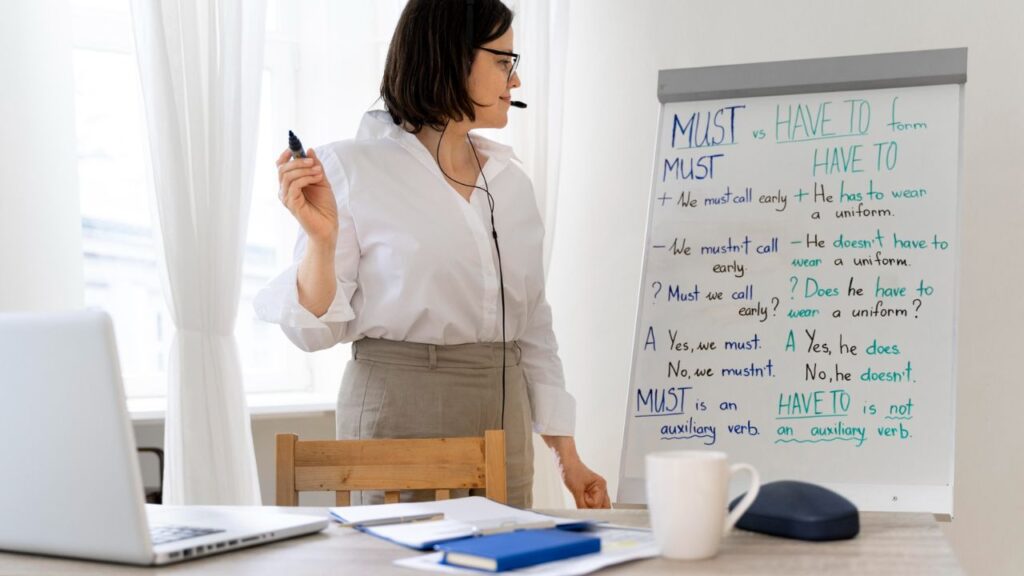
Most people don’t fail at spoken English because they’re “bad at languages.” They fail because they practice the wrong way—random YouTube videos, half-hearted Duolingo streaks, and zero real speaking. I’ve seen this up close: smart professionals, MBA grads, even startup founders who can write flawless emails but freeze the moment a real conversation starts. The good news? Spoken English improves fast when the routine is right. Not perfect. Just right.
Why Spoken English Feels Harder Than It Should
Speaking is a muscle-memory skill. Your brain has to retrieve words, arrange grammar, and pronounce sounds—all in real time. That’s why reading English feels easy while speaking feels like sprinting uphill.

Most learners over-focus on grammar rules instead of response speed. Spoken English isn’t about perfection; it’s about flow. Native speakers mess up constantly. They restart sentences, use fillers, shorten words. That’s normal. If your routine doesn’t include daily, slightly uncomfortable speaking, progress stays slow.
The 60-Minute Daily Routine That Works
This routine is designed for speed, not academic mastery. Do it every day for 30 days and you’ll feel the difference—in confidence, clarity, and response time.
Morning (15 Minutes): Train Your Ear First
Before you speak well, you need to hear English correctly.

Spend 10 minutes listening to natural, unscripted English. Not textbooks. Use:
- News explainers (BBC Learning English, NPR podcasts)
- Short interviews or talk shows
- YouTube creators who speak naturally, not slowly
The U.S. government-backed Voice of America Learning English offers graded audio that’s surprisingly useful for accent clarity: https://learningenglish.voanews.com
Then spend 5 minutes repeating—not silently, out loud. This is called shadowing. Don’t pause the audio. Stay slightly behind the speaker, even if you mess up.
Afternoon (20 Minutes): Speak Without Thinking

This is where most people avoid the work. Don’t.
10 Minutes: Self-Talk (Yes, Seriously)
Pick one daily topic:
- What you did yesterday
- Your opinion on a news headline
- Explaining your job to a stranger
Speak continuously for 2 minutes. Stop. Reset. Do it again. Five rounds.
No notes. No phone. Just talk.
Your brain learns to build sentences on the fly. That’s the skill you want.
10 Minutes: Sentence Expansion Drill
Take one simple sentence:
“I went to work.”
Now expand it:
“I went to work late because traffic was terrible.”
“I went to work late because traffic was terrible, and my boss noticed.”
This trains fluency, not vocabulary lists.
Evening (15 Minutes): Real Feedback or It Doesn’t Count
You must hear yourself from the outside.
Option 1: Record and Review
Record 3 minutes of speaking on your phone. Play it back once. Don’t judge everything—just note:
- One pronunciation issue
- One repeated grammar mistake
- One filler word you overuse
Fix only those tomorrow.
Option 2: Speak With Humans
Use platforms where real conversation happens:
- Language exchange apps
- Online speaking clubs
- Short daily calls with one partner
The British Council’s English speaking resources are well-structured and free: https://learnenglish.britishcouncil.org
Weekly Focus: One Skill at a Time
Trying to fix everything slows you down. Rotate focus weekly.
| Week | Primary Focus | What to Ignore |
|---|---|---|
| 1 | Confidence & flow | Grammar perfection |
| 2 | Pronunciation | Vocabulary size |
| 3 | Speed & response | Accent polishing |
| 4 | Natural phrases | Complex tenses |
This approach mirrors how children learn—first fluency, then accuracy.
Pronunciation Hacks That Give Fast Results
Accent isn’t about sounding American or British. It’s about being understood.
Focus on:
- Word stress (“PREsent” vs “preSENT”)
- Ending sounds (worked, asked, learned)
- Linking words (“gonna,” “wanna,” “kind of”)
The International Phonetic Alphabet charts from Cambridge University are helpful if you want clarity without overthinking: https://dictionary.cambridge.org/help/phonetics.html
The Biggest Mistakes Slowing You Down
Let’s be blunt.
You don’t need:
- Advanced grammar books
- Rare vocabulary words
- Perfect pronunciation
You do need:
- Daily speaking discomfort
- Repetition
- Forgiveness for mistakes
Fluency comes from usage, not knowledge. Most native speakers can’t explain grammar rules either—and they speak just fine.
How Fast Can You Actually Improve?
With this routine:
- 7 days: Less hesitation
- 14 days: Noticeable confidence
- 30 days: Clear improvement others can hear
- 90 days: Conversational fluency for daily life
The U.S. Department of State’s Foreign Service Institute estimates language speaking skills improve fastest with daily active use, not passive study: https://www.state.gov/foreign-language-training/
Staying Consistent When Motivation Drops
Motivation is unreliable. Systems work better.
Tie English to habits you already have:
- Speak while walking
- Shadow audio during workouts
- Record yourself before sleeping
Miss one day? Fine. Miss two? Restart immediately. No guilt spirals.
FAQs:
Can I improve spoken English without a partner?
Yes, initially. Self-talk and recordings work, but long-term fluency needs real conversations.
How many new words should I learn daily?
Zero, if they’re not used. Focus on phrases you actually say.
Is grammar important for speaking?
Only after fluency. Broken English spoken confidently beats perfect English spoken silently.